

I’ve been trading for a while now, and my path was probably similar to most people’s.
I started with day trading because that’s what you see everywhere online. The dopamine hits and watching the DOM for 12 hours were fun at first, but I quickly realized staring at charts all day isn’t how I want to spend the next decade.
Day trading involves a lot of discretion. That’s not a bad thing, but the longer I traded, the more I got drawn to building systematic strategies. Trades where I can clearly explain why they make money and have a proven track record of doing so.
The biggest shift from day trading to swing trading was the number of markets I had to cover. Day trading kept me focused on European bonds, indices, and Bitcoin.
Swing trading suddenly had me looking at forex, commodities, ETFs, stocks, and more.
Over time, I figured out what I actually want to build: a portfolio of uncorrelated strategies that harvest different risk premiums across a range of assets, using both futures and options.
Eventually developed several strategies trading momentum or mean reversion using dark pool volumes, options skew, crypto derivatives data, and futures COT positioning.
As I got deeper into options, I started harvesting the variance risk premium by selling what I believed were overpriced contracts, trading volatility around earnings events, and expressing views on forward volatility through calendar spreads.
This quickly resulted in a growing stack of active subscriptions across a range of platforms, costing thousands of dollars a month, while still missing features I actually wanted.
So around six months ago, I decided to consolidate as much of my process as I could. What started as simple Python scripts for custom indicators and local data storage evolved into a fully functional multi-asset end-of-the day analytics platform covering 1,000+ futures, crypto, stocks, and ETFs with deep historical data and a range of proprietary indicators which is now live.
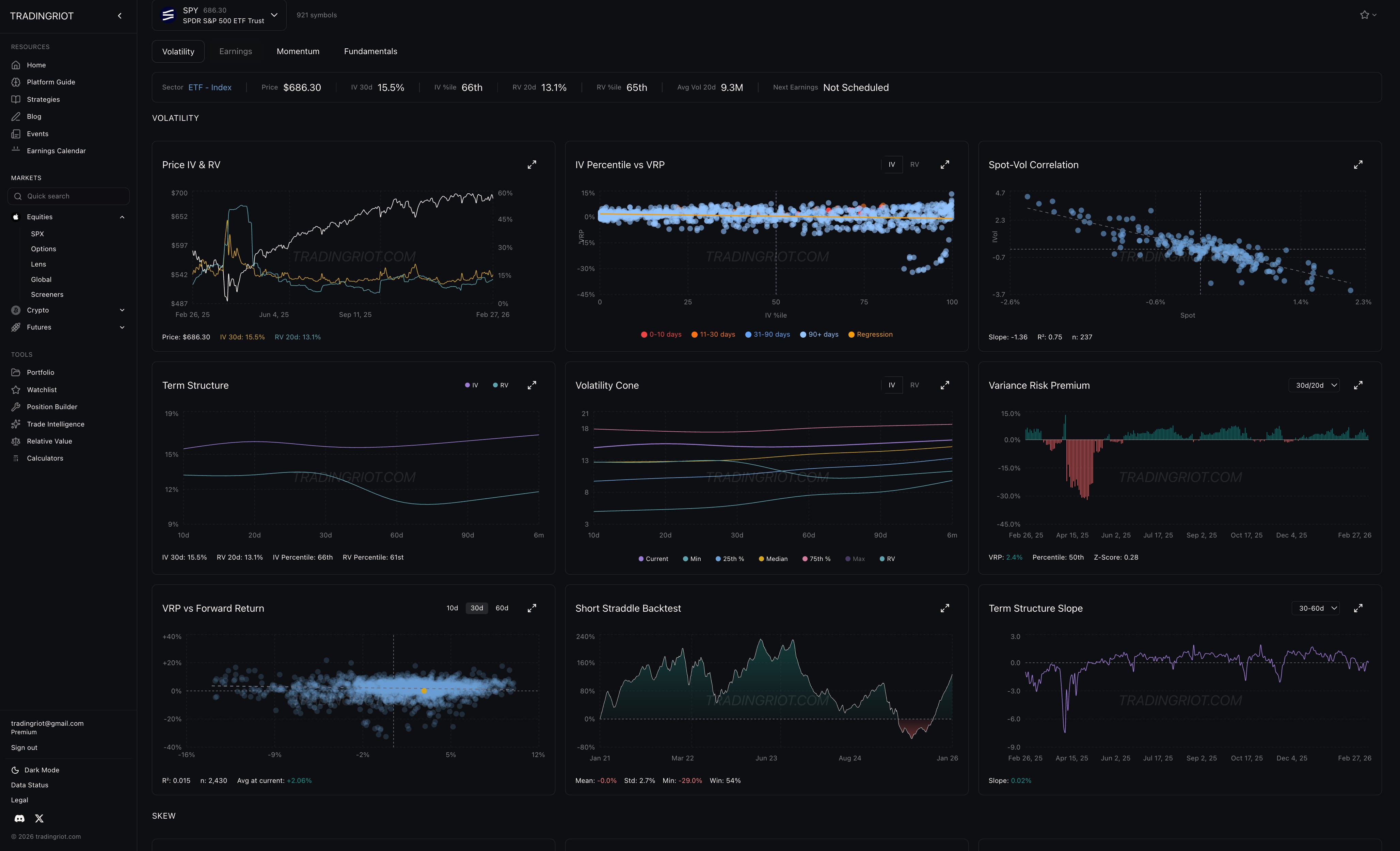
I figured I’d put this article together as a deep dive into all the features you can find on the platform.
Before we get into it, you can check it out at tradingriot.com. Registering a free account gives you access to a range of tools and actual data for selected markets. For those who want the full experience, there’s a premium tier that unlocks unlimited access to all analytics and tools, which I’ll cover throughout the rest of the article.
Cryptocurrencies
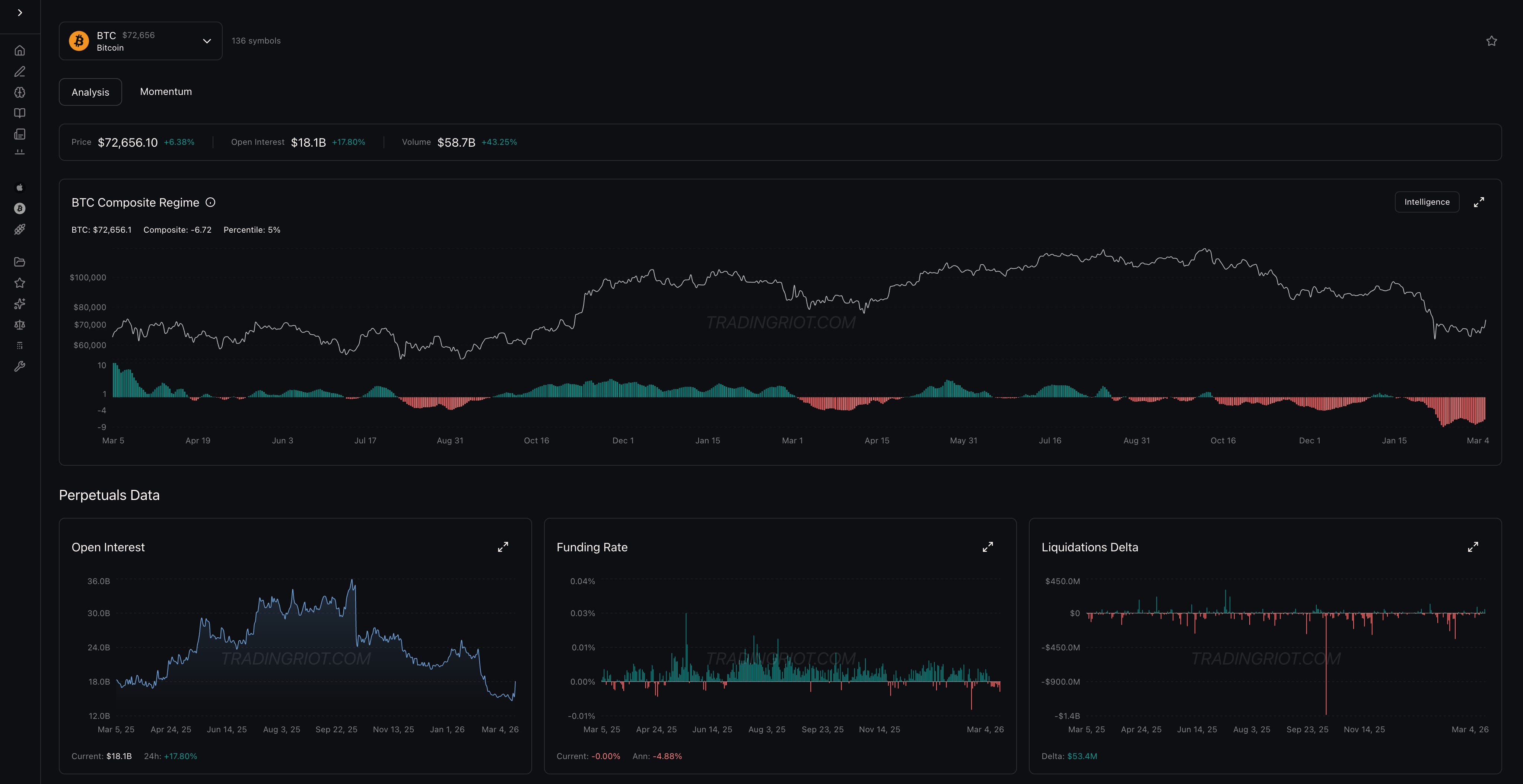
Inside crypto section you will find analytics for over 150 coins using aggregated data from 8 different centralized exchanges and 5 years of historical data.
All markets display perpetuals data like open interest, funding rates, and liquidations with Z-score functions that quickly flag any elevated positioning relative to historical levels.
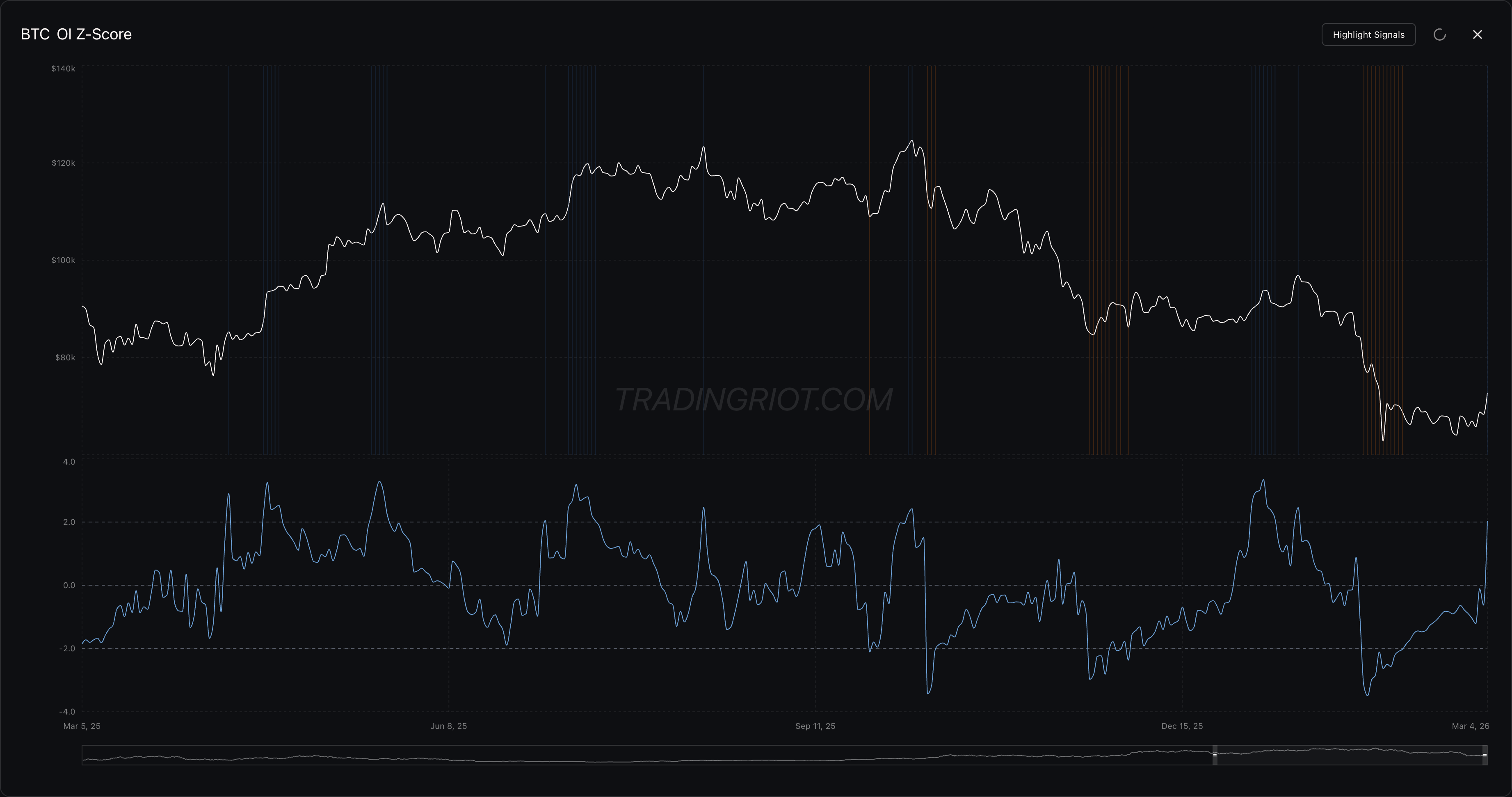
Besides the perp data, you also get access to spot orderbook delta to clearly see supply or demand coming from spot markets. For Bitcoin and Ethereum, options data is also available, giving you clear insight into volatility and skew positioning.


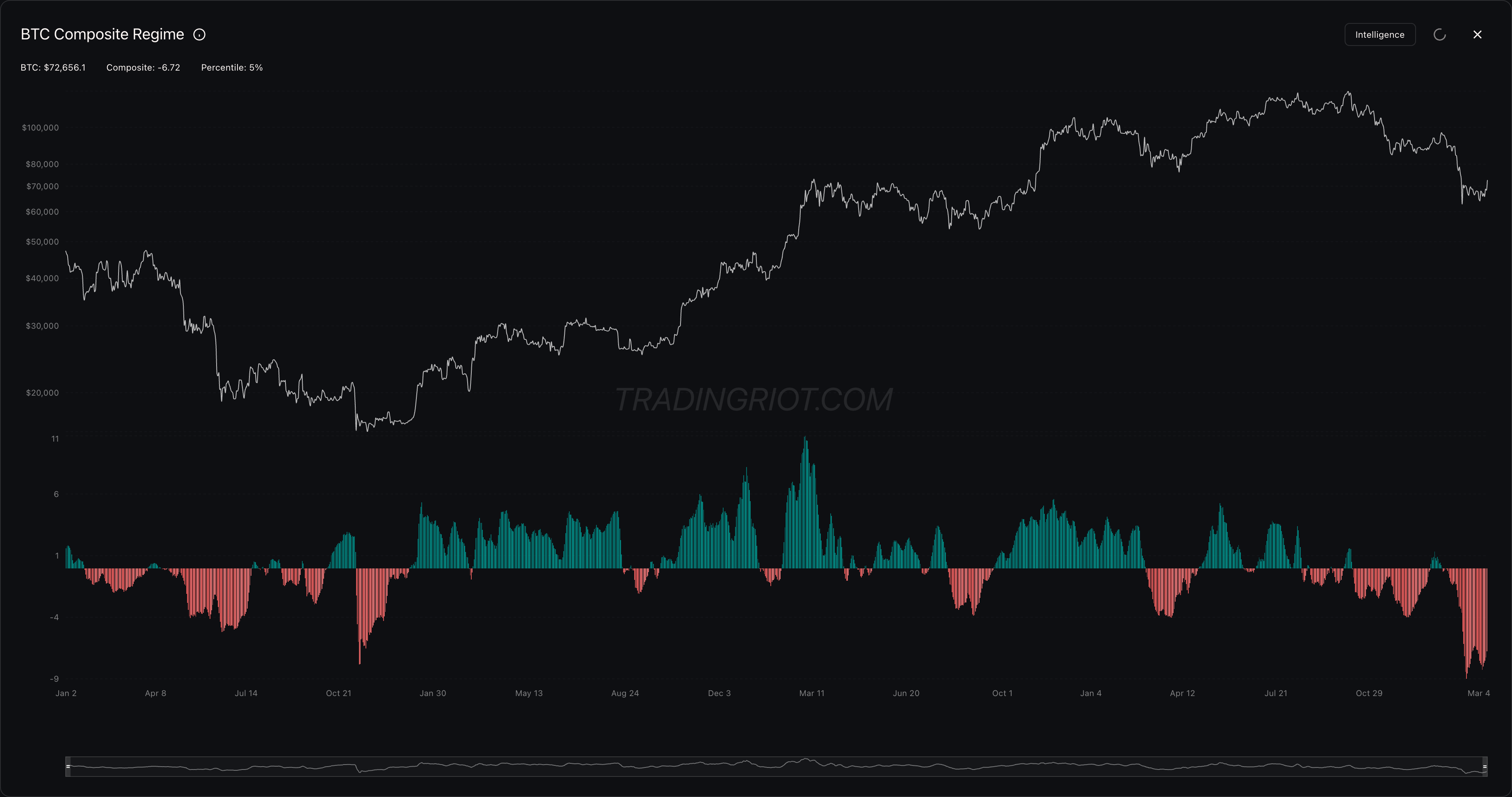
Bitcoin and ETH have composite regime indicators available. This is my own model that gauges sentiment by combining data from different derivatives. It can be used in several ways, from spotting regime flips to identifying historical extremes of peak fear and euphoria.
One of my main goals with this project was not only to build the analytics but also to distill them into actionable signals. That's why each asset class has its own screener that highlights all the extremes and finds tradeable instruments.


Equities
For equities, analytics across 900+ markets are available: IV term structure, volatility risk premium, skew, dark pool activity, and earnings performance history, all with 10 years of historical data. You also get 12 quarters of earnings history with implied moves and accuracy tracking, plus a news and press releases feed for every symbol.
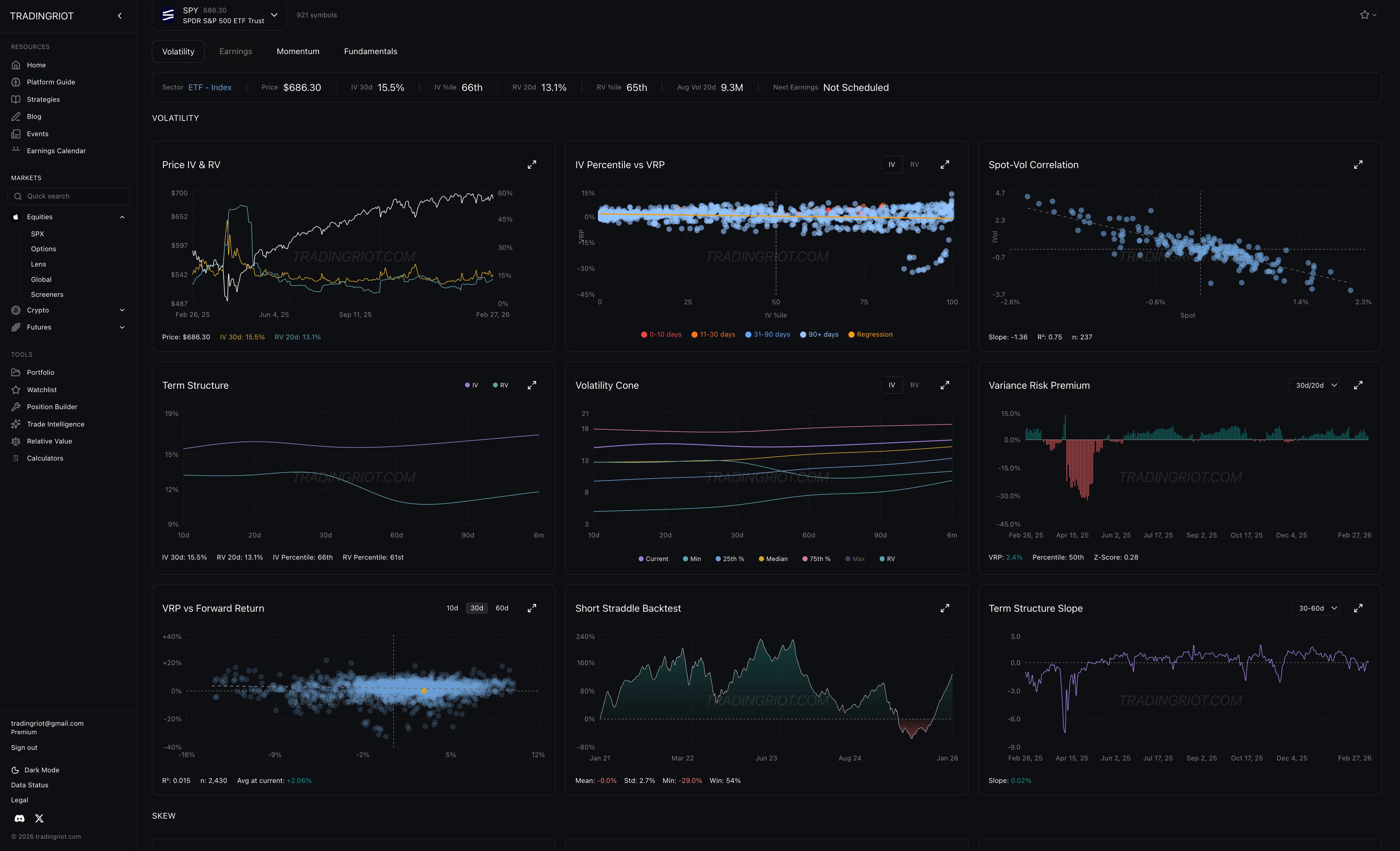
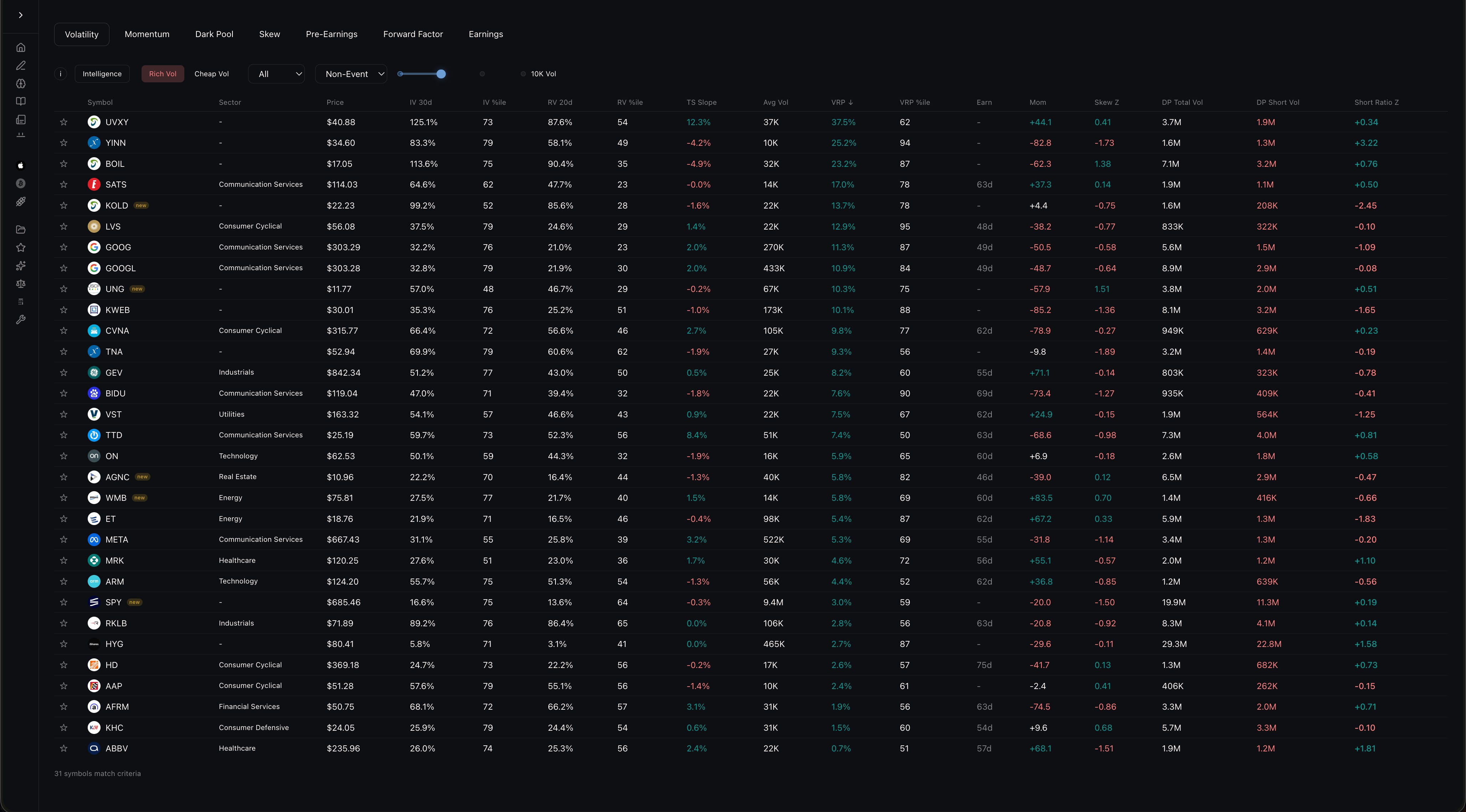
Most of my trading these days is in equities using options. Selling volatility where it’s overpriced, buying where it’s cheap, trading around earnings, expressing views on skew through risk reversals, or spotting early momentum shifts using dark pool volumes.


In the equities section, you’ll find straddle backtests for both earnings and longer-term VRP. For any dataset that can translate into directional moves, like dark pool volumes or skew, you can see the historical effect on price when extremes were reached.
You also get access to additional analytics dashboards focused on global market performance across sector ETFs, international markets, and the largest single-name stocks.


While crypto and futures have single rule-based strategies, equities can be approached in many different ways. All of these are covered in depth inside the platform's educational section. That's why you'll also find different screeners that surface the best markets for each strategy based on preset criteria.
SPX and Macro Events
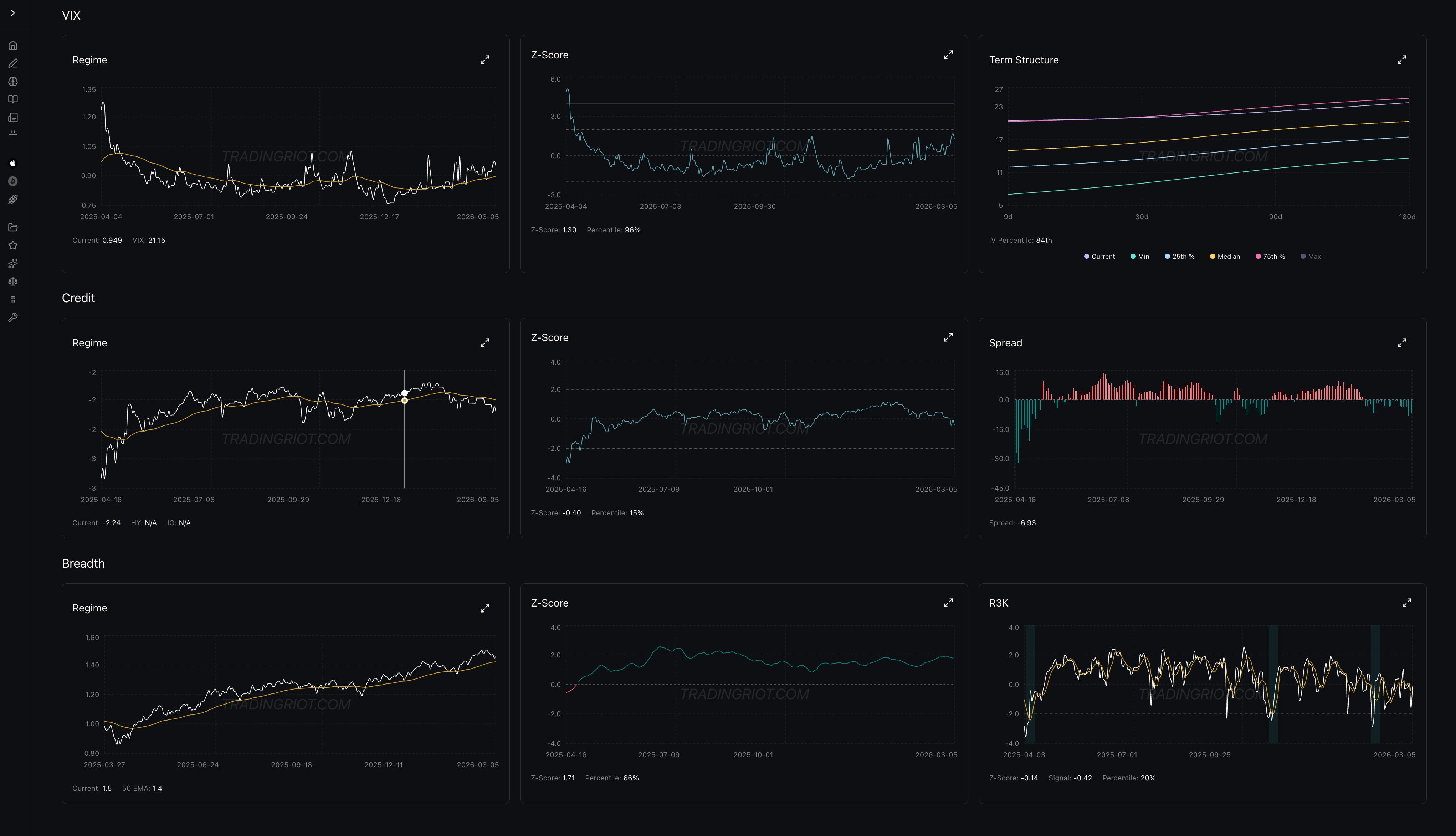
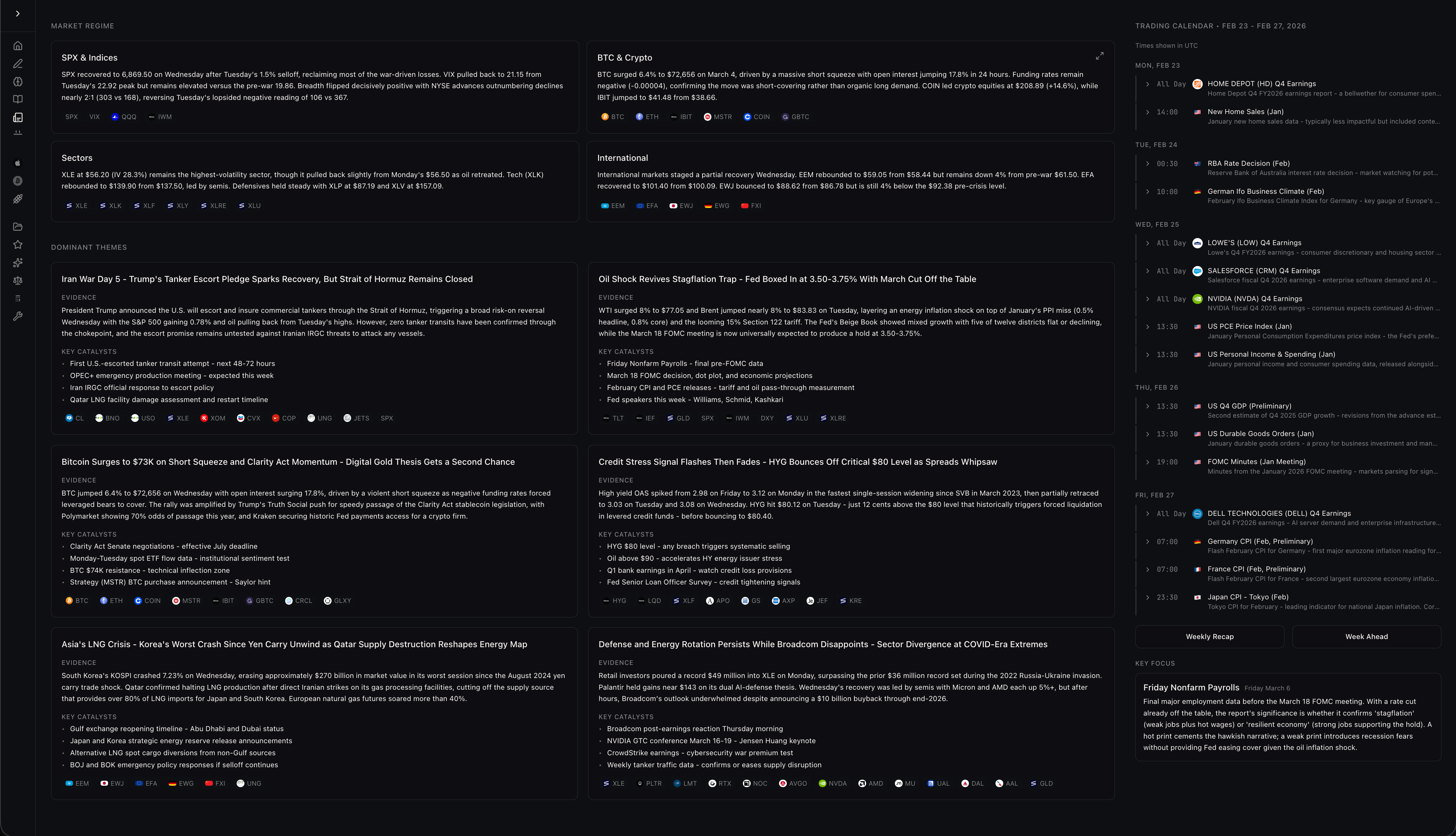
Speaking of equities, besides the options analytics for SPY and futures data for ES, SPX also has its own dashboard with a composite regime index built from indicators like market breadth, credit spreads, and VIX regime.
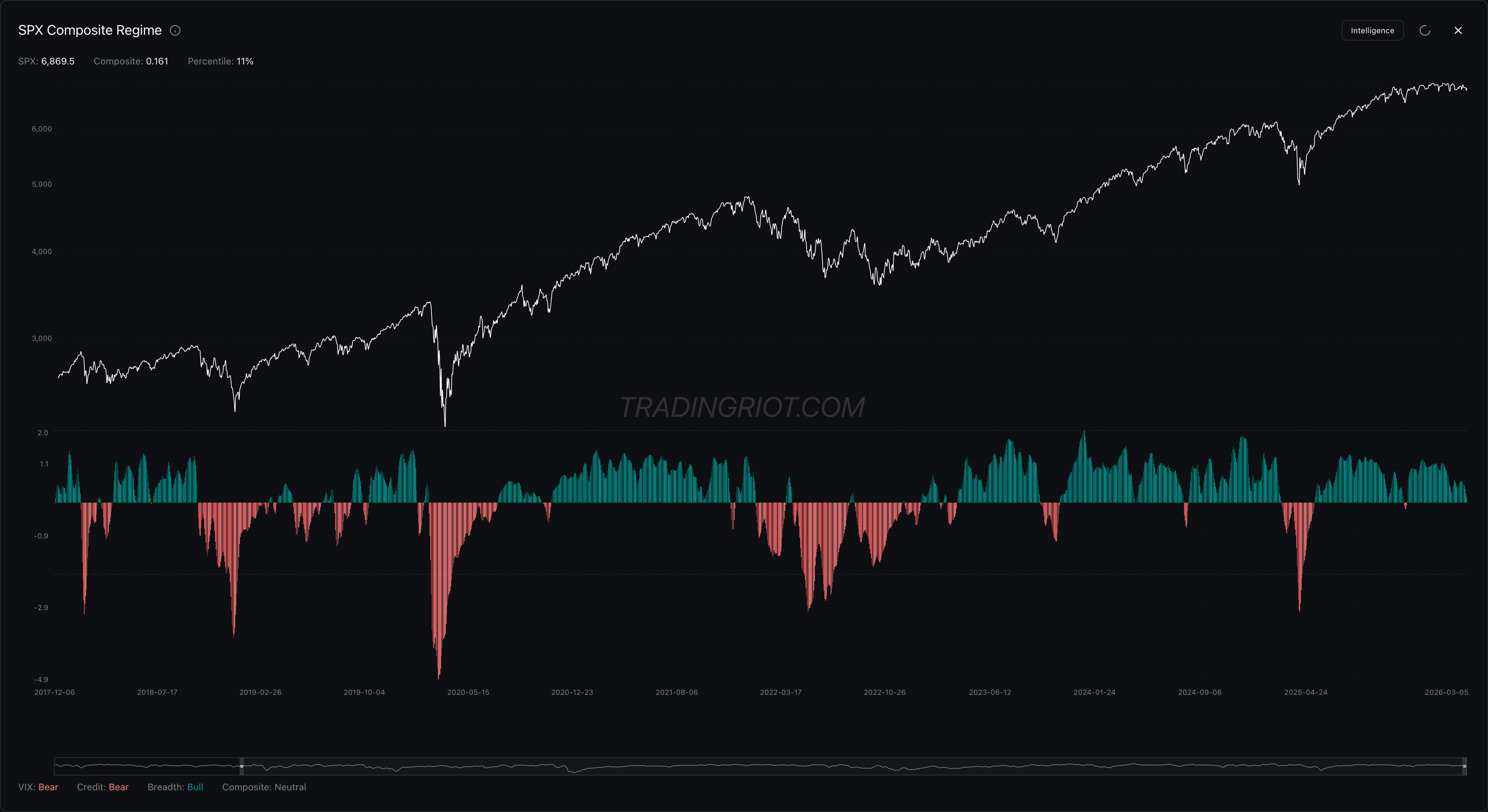
The goal of this section is to give you look of overall strength of stock market, and make more educated decision when to go risk-on and risk-off even for more passive investing if you are trying to capture the positive drift in equities.
On top of that, you can access the Events page, which is free for anyone with a registered account. There you can keep up with all daily events, the economic calendar, and weekly summaries posted on weekends.
Futures
Inside the platform you will also get analytics to the most liquid futures, you can find data such as CFTC Commitment of Traders positioning, seasonality patterns, valuation models, and CME and ICE options on futures data for 35+ contracts across indices, bonds, currencies, metals, energies, grains, meats, and softs.
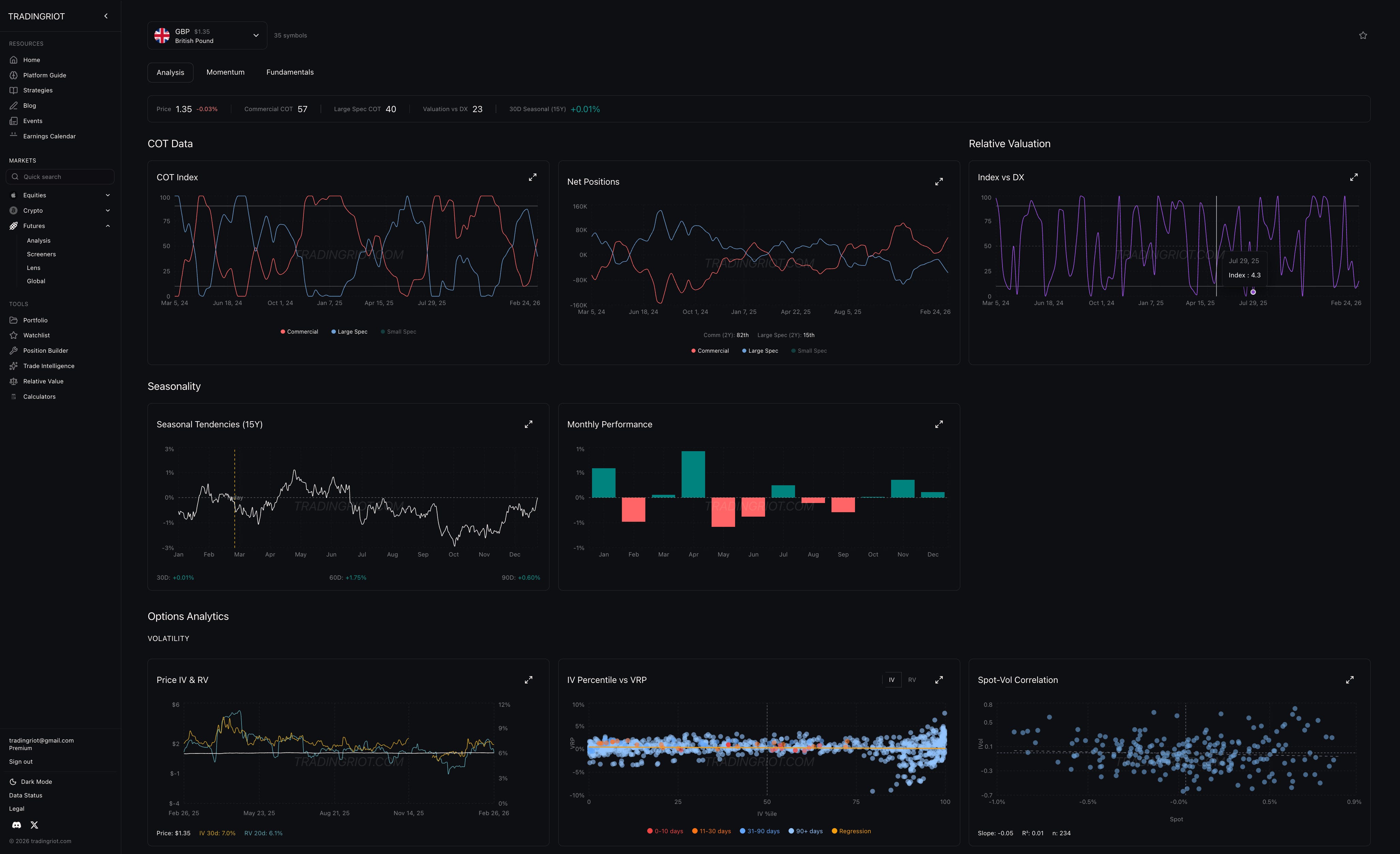
The options market especially is something not many traders pay attention to, but it can reveal very strong positioning clues. While a lot of other platforms only use ETF equivalents, the data I use comes directly from CME and ICE futures, so you get analytics on a range of different contracts.


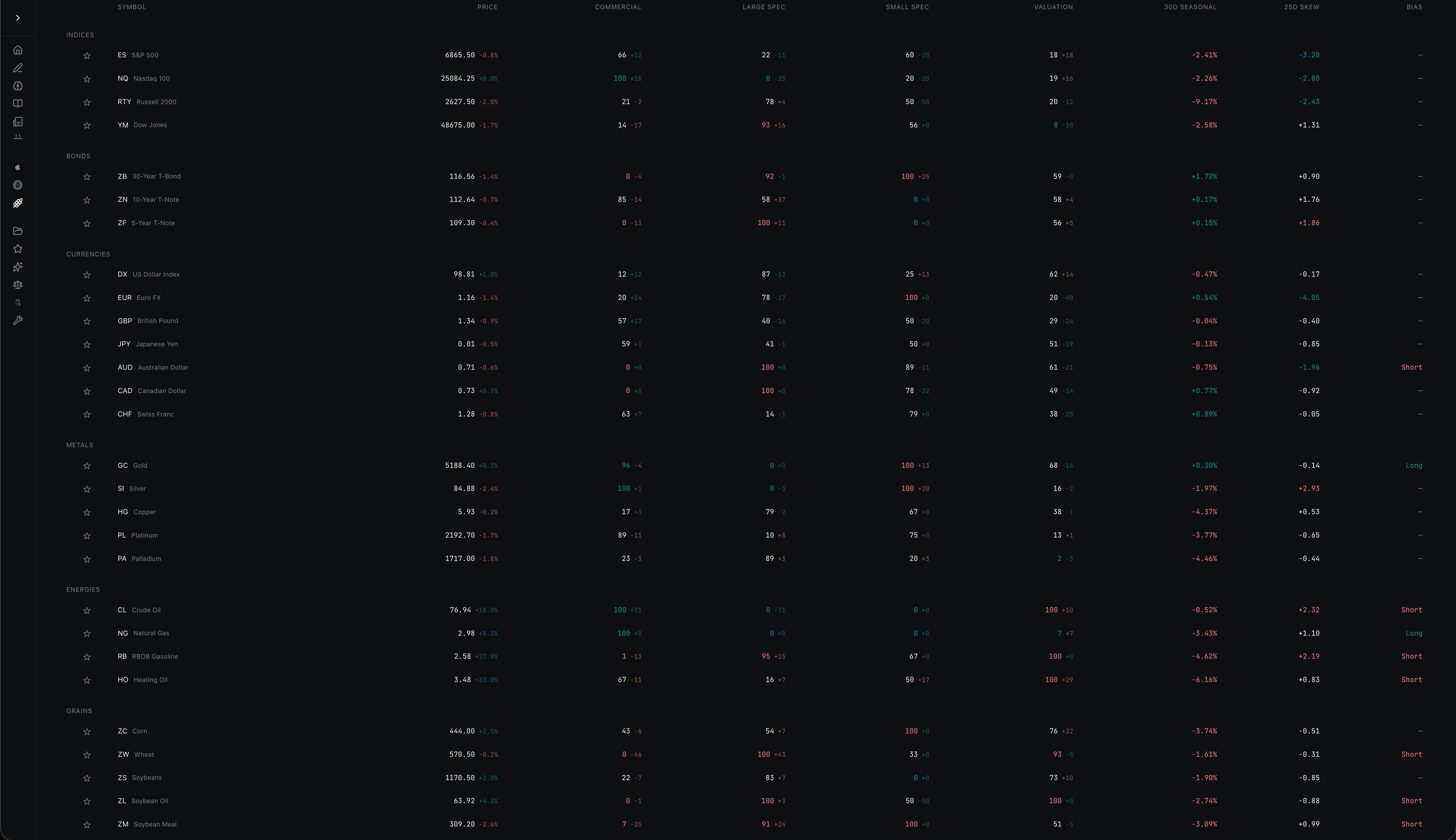
The futures scanner then uses a predetermined set of rules for each indicator to provide a directional bias for each market on a weekly basis.
Momentum
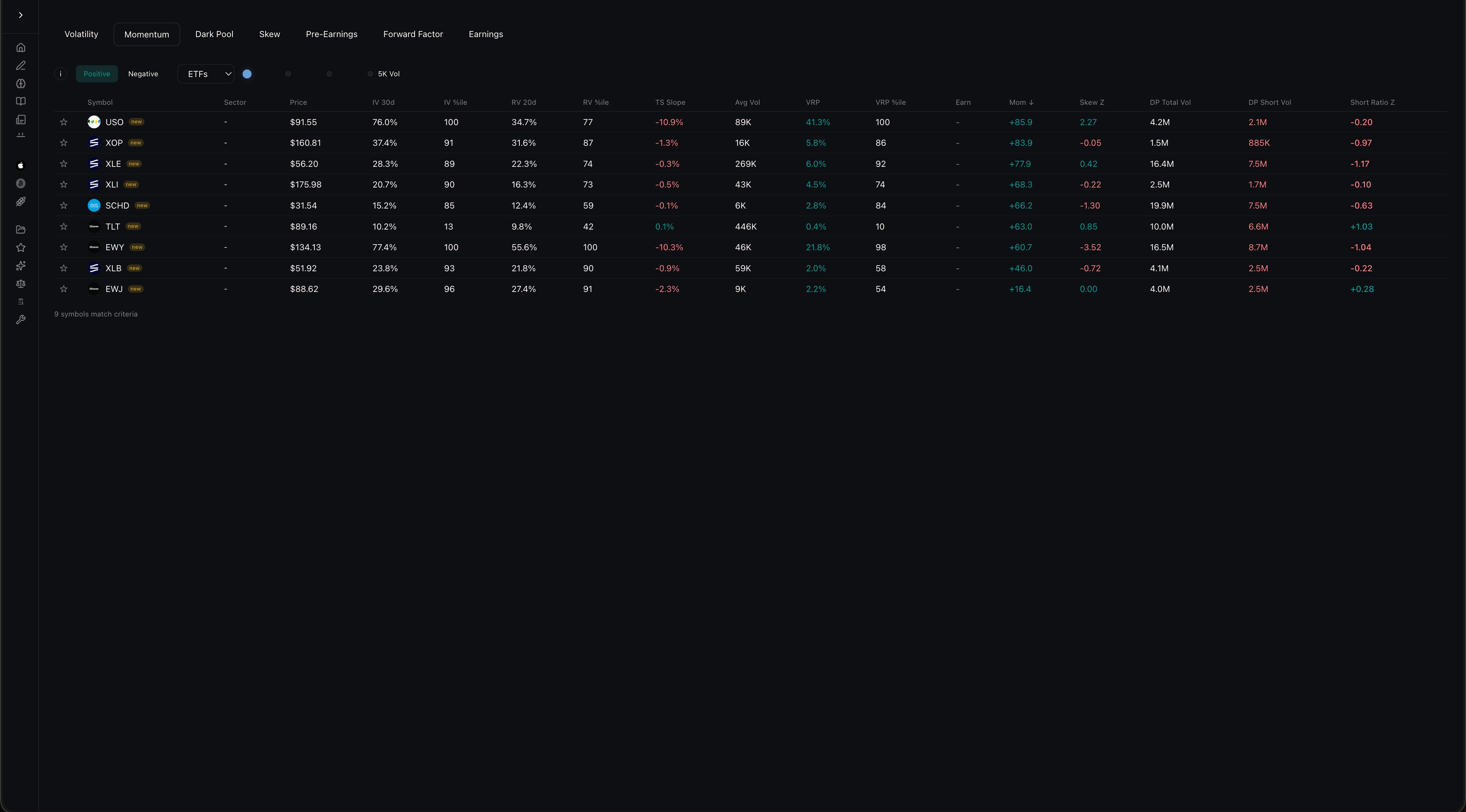
One thing which is universal for all markets is the momentum section.
Inside that you will find proprietary indicator designed for both trend following and mean reversion strategies. Directional intensity and volatility regime detection across all asset classes with a proprietary price distribution model and cross-asset screener.
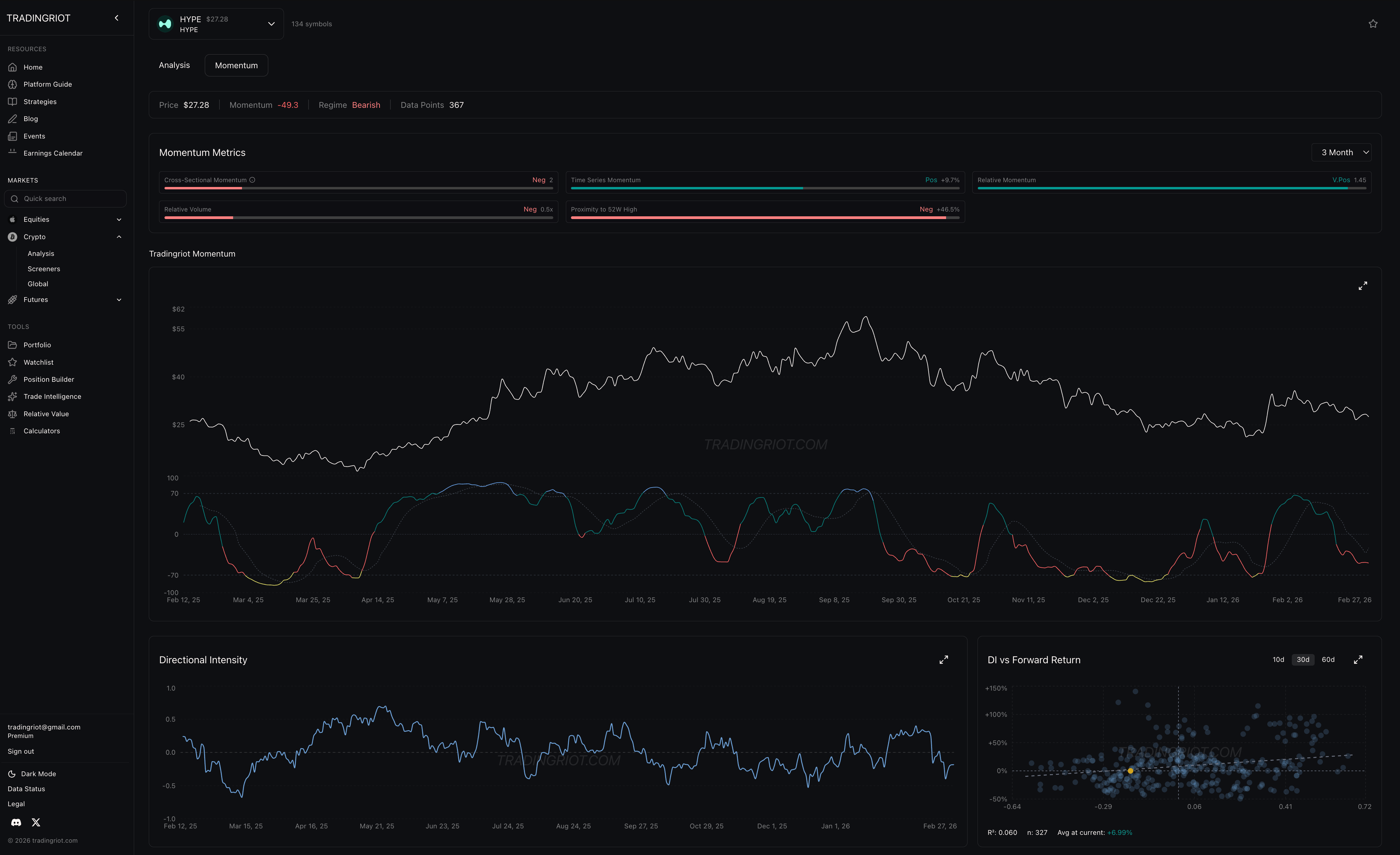


The momentum section can be used as confluence for any strategy, but each asset class also has its own momentum screener. These strip away all other indicators and simply compare momentum using a variety of metrics: performance within sectors, relative volume, and more.
Another tools and features
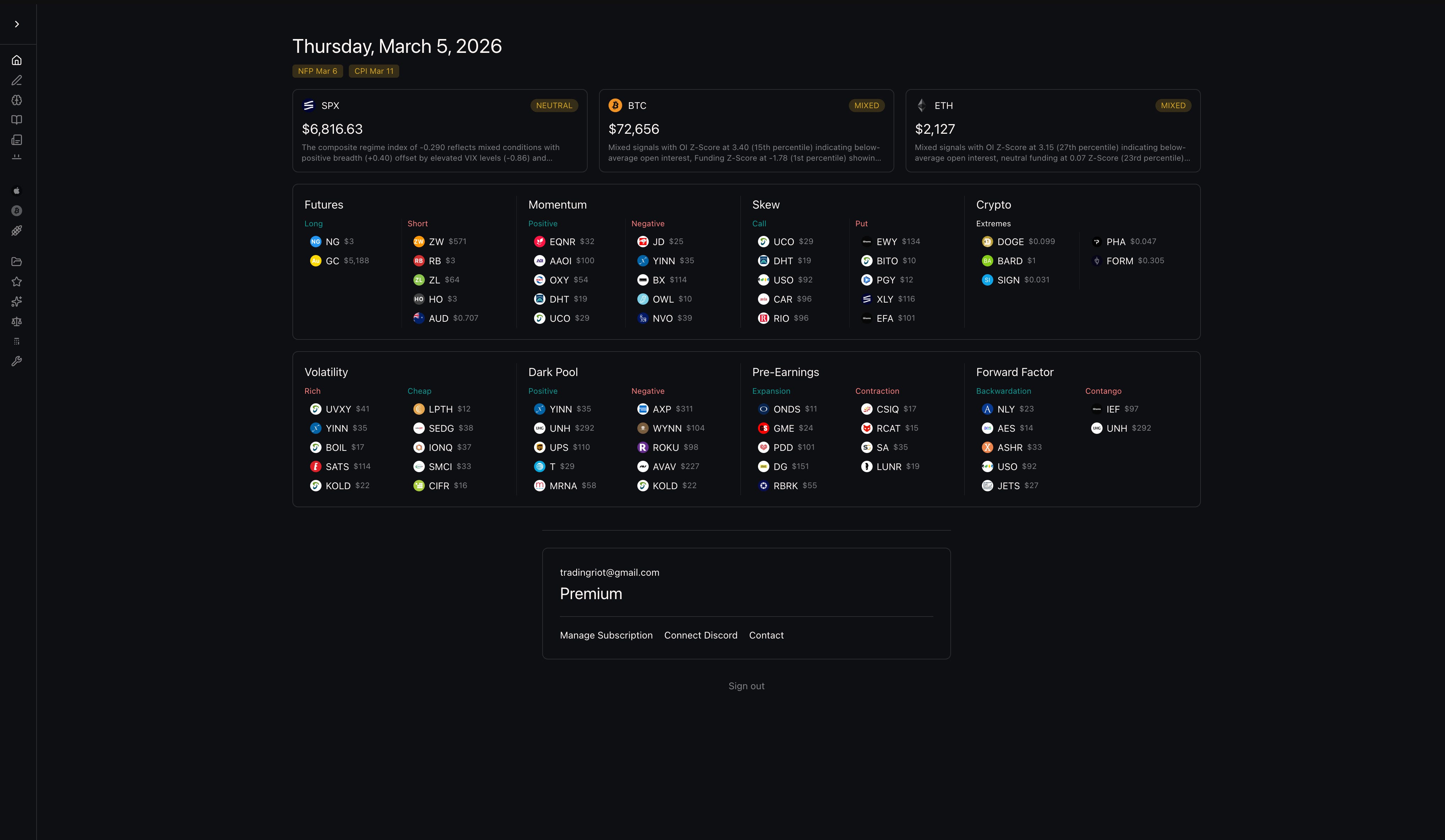
Besides the main analytics, you'll also find a range of tools and features across the website. Premium subscribers get a daily outlook on their homepage that highlights the top trading opportunities for each day.
If you've followed me in the past, you'll know I've shared plenty of educational articles and content.
I've tried to do the same on the website. All free accounts get access to an educational primer that explains futures and options dynamics in depth. Premium accounts get access to twelve additional educational chapters breaking down each strategy, with systematic rules for trade selection and execution.
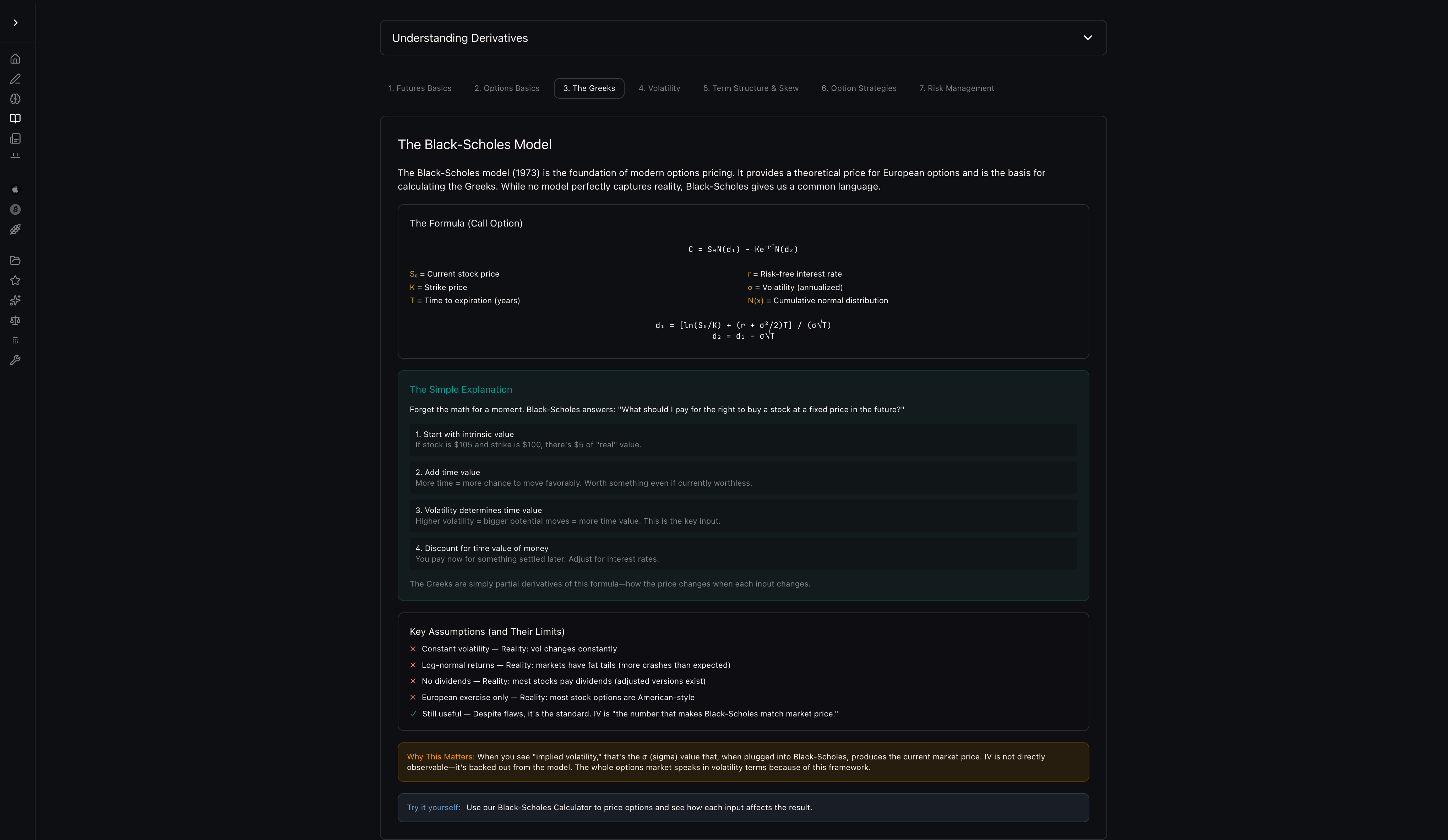
Beyond that, anyone with an account can use different calculators, the options strategy position builder and earnings calendar. Premium members also get access to relative value, portfolio, and trade intelligence tools.


In Conclusion
This has been a great personal project over the last few months and has allowed me to create a one-stop place for all the strategies I trade. The website is live at tradingriot.com. Whether you consider joining premium or not, I'd be glad for any feedback.
Feel free to reach out any time with questions, either via email or on X.
Subscribed.
Looks like the Discord link from the main page is broken (https://tradingriot.com/discord)
Gold mine content